Oak Ridge's Dense Residential Grid Creates Constant Triggers for Reactive and Aggressive Dogs
Behavior rehabilitation in Oak Ridge, TN for reactive and aggressive dogs — threshold management, control protocols, and confidence rebuilding for lasting stability.
Serving Oak Ridge, TN (ZIP 37830) and nearby neighborhoods. See all areas we serve
Proximity, Fencing, and Foot Traffic Turn Manageable Reactivity Into a Daily Crisis
Oak Ridge's tightly packed neighborhoods — a legacy of its planned grid layout — mean that dogs living there encounter triggers at close range with little buffer distance: neighbors walking dogs past shared fence lines, cyclists passing within feet on narrow sidewalks, and unfamiliar people approaching from multiple directions on the same block. For a dog already operating at the edge of its stress threshold, that density of stimuli doesn't just create bad walks — it creates a dog that is perpetually aroused, perpetually scanning, and perpetually one encounter away from a dangerous reaction.
Behavior rehabilitation addresses this through threshold management — a process that maps exactly how close a trigger needs to be before the dog's behavior escalates, then builds controlled exposure at distances just below that threshold so the dog's nervous system learns to process the stimulus without triggering a defensive response. K9 Services Unlimited LLC uses this approach because suppressing a reaction without changing the underlying stress response produces a dog that holds it together until it doesn't, which is more dangerous than the original problem.
What Rehabilitation Actually Changes — and How Long It Takes
The mechanism of behavior rehabilitation is different from obedience training because the goal isn't teaching a new behavior — it's changing the emotional state that drives the problem behavior. A dog that lunges at strangers isn't disobeying a command to stay calm; it's responding to a stress signal its nervous system hasn't learned to regulate. Rehabilitation works by pairing controlled exposure to those stress signals with structured calm states, gradually building the dog's capacity to encounter a trigger and choose a different response. This takes weeks, not sessions, and progress is measured in threshold distance and reaction intensity, not just whether the dog performed a command.
Control protocols run alongside emotional rehabilitation to ensure safety during the process. Dogs learn to execute commands under arousal — not because compliance replaces the underlying stress, but because a dog that can hold a sit when triggered gives the handler time to manage the situation before escalation occurs. Confidence rebuilding through structured success experiences — tasks the dog can complete and be rewarded for — reduces the overall anxiety level that makes every trigger hit harder. The visible result is a dog that can walk an Oak Ridge sidewalk past a fence-reactive neighbor dog without requiring physical restraint from its handler.
If your dog's reactivity or aggression has made daily life in Oak Ridge feel unmanageable, behavior rehabilitation offers a structured path forward. Learn More to discuss your dog's specific triggers and what a realistic rehabilitation timeline looks like.
What Goes Wrong When Reactive Behavior Isn't Addressed Structurally
Most owners of reactive or aggressive dogs try several approaches before reaching structured rehabilitation — avoidance, distraction, corrections, or management tools — and find that each one works until it doesn't. Understanding why these approaches fail helps clarify what rehabilitation addresses differently and why the structure matters.
- Avoidance reduces incidents but raises the dog's overall arousal baseline, meaning the dog becomes reactive at greater distances over time rather than less
- Corrections applied at the peak of a reaction address the symptom but increase suppression pressure, which raises the risk of a bite with fewer warning signals
- Management tools like no-pull harnesses control the dog mechanically without changing the underlying response, so reactivity persists the moment the tool is absent
- Distraction-based redirection works below threshold but fails in Oak Ridge's dense residential environment where triggers appear suddenly and at close range
- Inconsistent handling — where some family members enforce boundaries and others don't — teaches the dog that the rules are person-dependent, which destabilizes any progress made in sessions
None of these failures mean the dog is beyond help — they mean the approach wasn't matched to the actual problem. Behavior rehabilitation in Oak Ridge is built around exactly what standard training misses. Learn More to get a clear assessment of where your dog is and what a structured program addresses.
See Our Training in Action in Oak Ridge
K9 Services Unlimited serves Oak Ridge and the surrounding East Tennessee towns — in-person dog training, puppy obedience, and board & train programs, five-star rated.
Dog training in Oak Ridge for family dogs
Not every dog in Oak Ridge is a working dog. Oak Ridge is part of the East Tennessee area we serve. Justin Rigney has 33 years of professional dog training experience and Rebeka is a NePoPo Gold Certified trainer, and together they train family dogs as well as working dogs. Read more about our Knoxville training, our trainers and all the areas we serve.
Do you offer dog training in Oak Ridge, TN?
Yes. K9 Services Unlimited serves Oak Ridge and the surrounding area with puppy training, obedience, off-leash control, board and train, behavior modification and working dog training. Call (865) 455-5191 or request a free consultation.
What programs are available for Oak Ridge dogs?
We offer puppy training, obedience training, off-leash control, board and train (4 or 6 weeks), behavior modification and working dog training. We recommend a program after a free consultation.
How do I get started with dog training in Oak Ridge?
Call (865) 455-5191 any day from 7 AM to 7 PM or request a free consultation. Tell us about your dog and what you want to change, and we will recommend a clear next step.
Keep exploring

Puppy Training in Knoxville, TN
Puppy training in Knoxville, TN: socialization, potty and crate training, and early obedience from trainers with 33 years of experience. Free quote.
Read more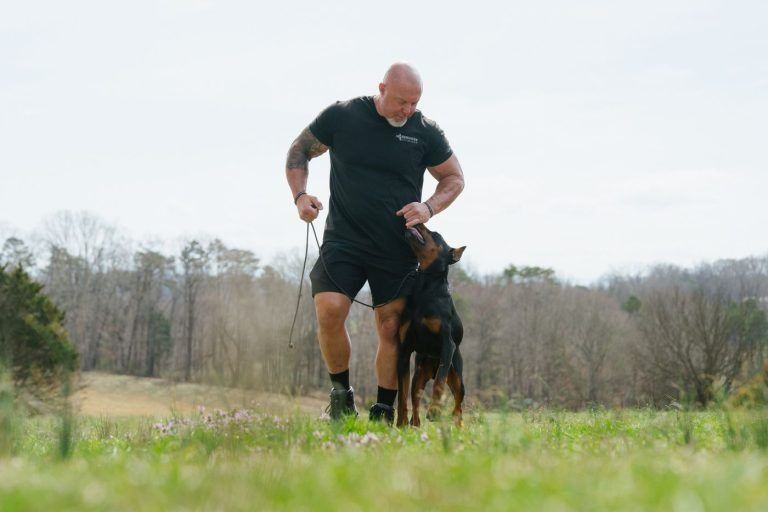
Dog Obedience Training Knoxville TN
Dog obedience training in Knoxville, TN: leash manners, commands and impulse control from trainers with 33 years of experience. Free consultation.
Read more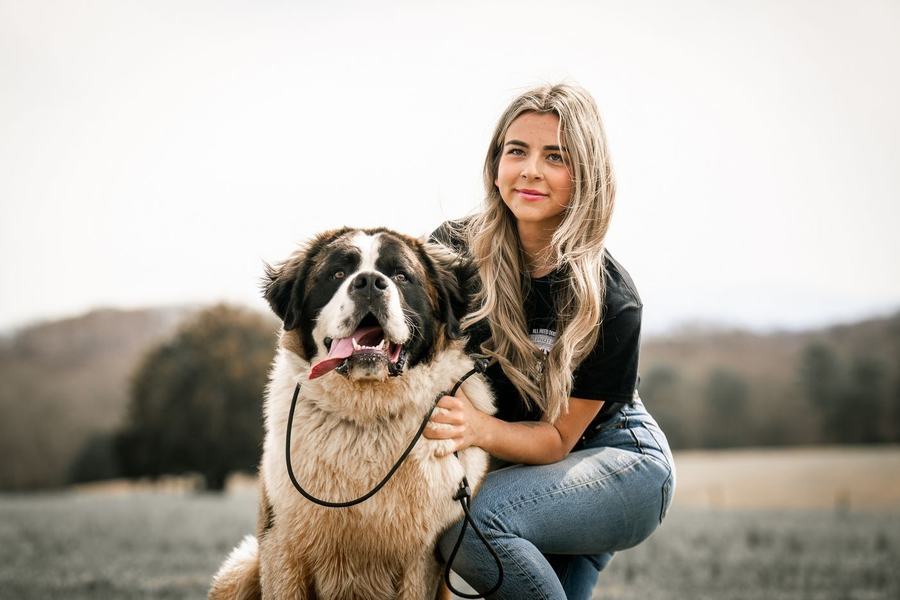
Board and Train in Knoxville, TN
Board and train dog training in Knoxville, TN: 4, 6 and 8-week programs with daily sessions and owner coaching from a trainer with 33 years of experie...
Read moreReady to get started?
K9 Services Unlimited trains dogs and their owners in Knoxville, Tennessee and the surrounding communities. Call us, send a message, or request a free consultation any day between 7 AM and 7 PM. Tell us about your dog, what you would like to change, and what a good result looks like for your household, and we will recommend a clear next step.
(865) 455-5191Every Day 7 AM - 7 PM
Schedule a free consultation