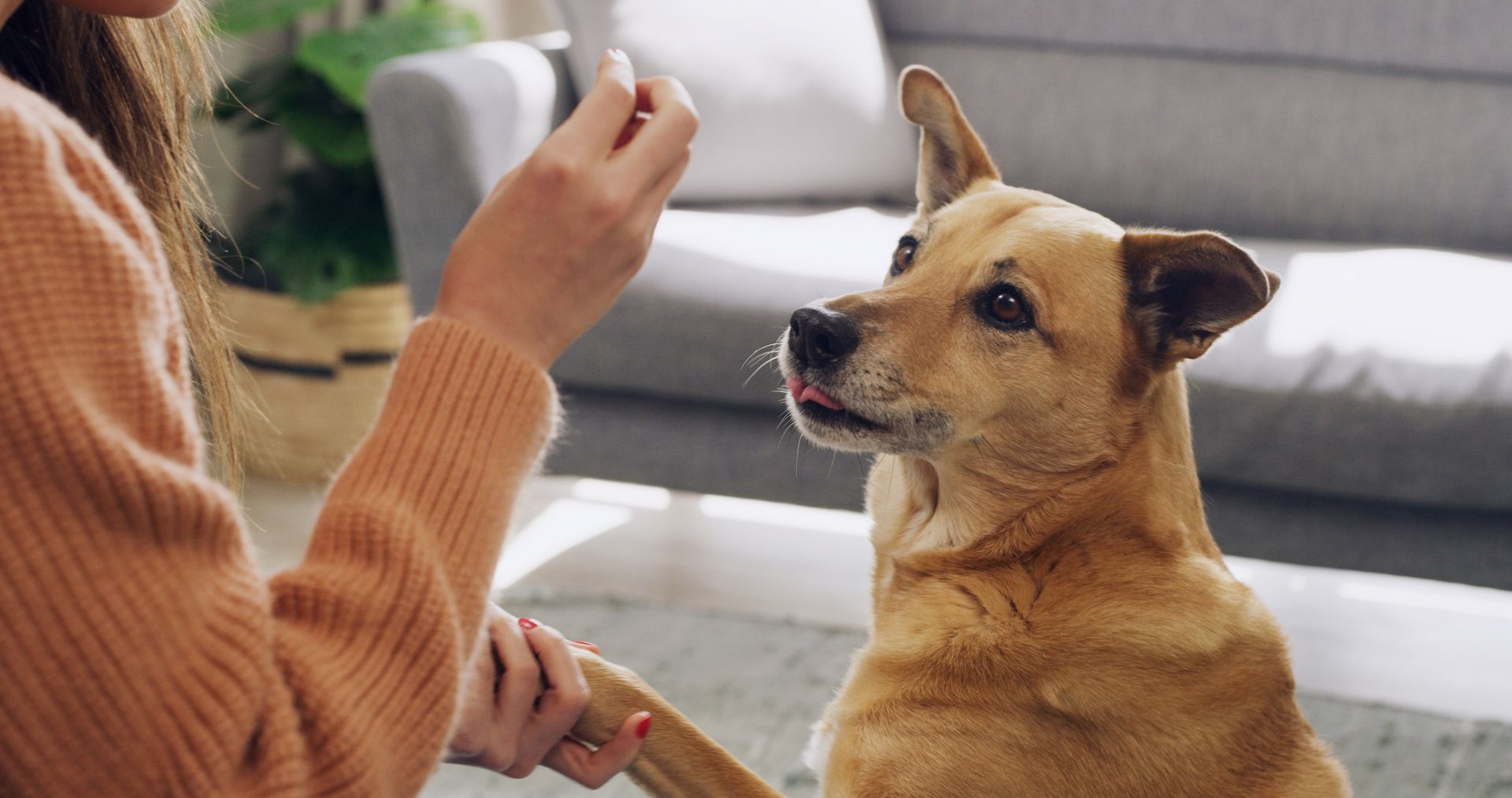
Food Is a Tool, Not a Bribe
How to use food-based training the right way, why motivation matters more than the treat itself, and what most owners get wrong
I want to start by saying something that might surprise you coming from a balanced trainer: I am a big believer in food-based training. Always have been. Food is one of the most powerful motivators in the animal kingdom, and if you're not using it intelligently, you're leaving a massive tool on the table. Whether it's pet folks, competition handlers, or working dog trainers, no matter what your path is, food belongs in your toolbox.
But here's the thing. There's a world of difference between using food as a training tool and using food as a bribe. Between a dog that works because food might be coming and a dog that works because food is always dangling in front of its face. One of those dogs has genuine drive. One of those dogs has a handler who's stuck in a permanent negotiation with an animal that figured out the game a long time ago. I've seen it a thousand times, and I want to help you avoid it.
The dopamine story nobody tells you
There's research out of UC Berkeley, a professor named Robert Sapolsky, who did a study on dopamine using primates. They set up an environment where monkeys had to pull levers, and when they pulled enough times a light would go off and food would come out. They put probes in to measure dopamine secretion throughout the process. And what they found was this: dopamine was through the roof while the monkeys were pulling the lever in hope and anticipation of the reward coming. When the reward actually came, dopamine plummeted.
Read that again. The juice isn't in the getting. The juice is in the wanting. The hope and anticipation of the reward is where the real neurological fire lives, and the moment the reward arrives, the flame goes out. That changes everything about how you should be using food in training, right?
The dog that doesn't know when the reward is coming is a dog that's on fire. The dog that knows a treat is coming every single time is a dog that's just going through the motions.
Think about a casino. Those gamblers sitting at the slot machines for hours, not going anywhere. Why? Because it's a variable reward schedule. They never know when the machine is going to hit. That mystery creates an almost biological compulsion to keep pulling. We can use that exact same system with our dogs. And when we do, we create animals that are hyper vigilant, locked in, and fighting for the behavior because they genuinely want the paycheck that might be coming. That's a completely different dog than the one who's learned that if he sits, a cookie will appear. Every time. Without fail.
The one hit wonder principle
So how do you build that kind of fire in a dog? It starts with hunger. Real hunger. Not starving the dog, not being cruel about it, but understanding that a dog who has been grazing all day and had food available whenever it wanted is a dog with zero urgency. And urgency is the thing that makes training sessions electric.
For most healthy adult dogs, I recommend one feeding a day, delivered through training. All of it. One shot, one session, everything in one go. What I call the one hit wonder. You sit down with your dog, you have their entire daily caloric intake in your pouch, and you train. The dog is hungry. The dog wants what you have. The dog is locked in on you like you're the most interesting thing that has ever existed. That's your window, and it is a genuinely powerful window.
And within that session, you're not doing the same boring one-for-one trade every single time. You mix it up. Sometimes the dog does one thing and gets paid. Sometimes they do three things and get paid. Sometimes they do something exceptional and you jackpot, meaning you open the whole pouch and let them dive in. Jackpotting communicates something important to the dog: bigger effort, bigger paycheck. It's capitalism, and dogs are capitalists. They're always looking for their best advantage.
The marker is everything
Here's where food training falls apart for most people. The timing. A dog lives in a world of one and a half to two seconds. That's the window science gives us to connect a behavior to a consequence. If your dog sits and you dig around in your pocket for three seconds before producing the treat, you've already missed it. You've paid the dog for something that happened three seconds ago, and the dog's brain has moved on.
This is why the marker, whether it's a clicker or a verbal marker like "yes," is not optional in a food-based training system. It's not a cute accessory. It's the mechanism. The marker travels at the speed of sound. It freezes a snapshot in the dog's brain at the exact moment the correct behavior happened, and it tells the dog: that. Right there. That's what's getting paid. And through classical conditioning, the marker itself becomes charged with meaning, so it buys you time. The dog hears the marker and knows the paycheck is coming, even if it takes you a moment to actually deliver it.
I've done my own little experiment with this. Thirty seconds after I've marked a behavior, the dog still connects the dots. But that only works after significant conditioning. In the beginning, you have to be inside that one and a half to two second window. Clarity first, then the bridge gets longer.
When food stops working and what it means
I get this question constantly. My dog was great with food early on and now he's just going through the motions. Slow, unmotivated, like it's torture. And I understand the frustration, because you look at that dog and you think the method failed. It didn't. The method gotapplied wrong.
A few things tend to happen. First, the food got too predictable. The dog figured out that the reward is coming regardless of effort level, so effort level dropped. Second, too many people got involved. When you've got a spouse, a kid, and a neighbor all training the same dog with different timing, different cues, different energy, the dog can't get into a groove. I always say find one person to dedicate the training, especially early on. The dog has to read one set of mannerisms, one body language, one communication style. That's hard enough.
Third, the food got given away too freely outside of training. Meals in a bowl, snacks off the counter, treats for existing. When food is everywhere, it means nothing. When food only appears in one context, that context becomes electric. The restaurant is only open during training sessions. You close the restaurant everywhere else, and suddenly the dog has a reason to show up.
Making the behavior self-rewarding
Here's what I consider the holy grail of training, the thing I aim for with every dog I work with seriously. Making the behavior itself self-rewarding. Not just training the dog to do a thing because food comes after. Actually building dopamine into the behavior so that when the dog hears the cue, the dopamine floods before the food ever appears.
I had a patrol dog, trained him through classical conditioning, built the behavior, created the dopamine in the behavior, and then overlaid the word. When he heard the word, it brought the dopamine. I could be out in the field, he could be dead asleep, and if I told him to heel, he would erupt. The word itself was the reward. That's the endgame. That's what we're building toward.
You get there through repetition and variable reward over time. You build the behavior with consistent reinforcement, then you shift to the variable schedule, and you keep raising the bar for what earns the jackpot. Before long the dog is doing more because they want more, not because they know more is coming. That's a dog who has ownership of the behavior.
Food training and balanced training are not opposites
I want to address this directly because I know what some folks in the force free echo chamber say about trainers like me. That we don't use food, that we only use pressure, that it's all corrections. That's not accurate, and it's not honest.
A complete training system uses every tool available. Food, toys, environmental rewards, play, engagement, and yes, appropriate pressure when it's needed and the dog has been prepared for it. These things don't fight each other. They work together. Negative reinforcement, teaching a dog how to turn off a slightly unpleasant sensation by doing the right behavior, actually prepares the dog for positive reinforcement. It gives the dog the answers to the test before the test comes. The dog that understands pressure and release and the dog that goes absolutely nuts for food are often the same dog. That combination makes for training that is durable, reliable, and genuinely enjoyable for the animal.
The goal has always been the same, no matter what your path is. A dog with ears up, tail up, eyes bright, working with genuine enthusiasm because they truly understand the game and love playing it. Food is one of the best tools we have for getting there. Use it right and it's remarkable. Use it as a crutch and you'll spend years wondering why your dog only listens when you're holding a treat. The difference is in understanding what's actually happening in that dog's brain, and building a system around it instead of around your convenience.
I've invented none of this. I'm a perpetual student, and I've stolen from everyone I admire. But what I can tell you from over three decades of watching dogs learn is that food-based training done correctly is one of the most powerful things you can do for your relationship with your dog. Done incorrectly, it creates a negotiation that the dog almost always wins. Know which one you're doing.
Want to build real drive in your dog?
Whether you're starting from scratch or trying to get your dog's motivation back, the principles are the same. Get in touch and let's talk about where your dog is and what theyactually need.